Tuesday, 31 July 2012

Let It Grow: Social media as a tool for grassroots democracy and community building

by:

"A small group of thoughtful people 
could change the world.
 Indeed, it's the only thing that ever has." 
 Margaret Mead

In The Garden Association we encourage small groups to use social media for communication and advertisement of their ideas to a broader audience. The new media can be the voice of the voiceless, the tribune of the ordinary people.

In our vision the new media approach is a very powerful tool for democracy, activism and education. For this reason we develop this blog in order to show how blogs can be used by organizations and informal groups.

In a world where the traditional media is restricted by corporate interests, political and economical dependence, censorship, auto-censorship, and so on, blogs and social networks are like a freedom flow that cannot be stopped. 

Let me prove this by giving you examples of two off- and online communities, using social media. The first one is a small group of residents of a small London street. The second one is a community with whose development I am directly involved.

Case study 1: Make South Vale Safe 

The initiators for the campaign explained the situation in this way: 


"South Vale is a residential street in Crystal Palace, London SE19, in the Borough of Croydon. It's a narrow street and traffic speeds down, often driving with two wheels on the pavement. Many young children live here, and to try to prevent a very possible tragedy, we are campaigning to make the road (and pavements) safe." 

The locals were concerned about the danger every morning when they took their children to school, walking on the narrow pavement area of the street, while cars and trucks quickly drive on it. So the people from South Vale started their fight for a safer street environment for their children. In the beginning of 2008 they made a campaign blog

Via their blog, the residents of South Vale could exchange information, reach many visitors and keep chronicle of their activities. Its content abounds in personal stories like this

The blog traces the numerous meetings and hard negotiations of the activists from "Make South Vale Safe" with representatives from the local Croydon Council and other decision-makers. Sometimes they were fruitless, but the activists did not surrender. In the meanwhile a lovely dog died on the street.

The people from South Vale received support from Home Zones - an international team working for more homelike and pedestrian-friendly residential areas, - and from London Play. With the organizational and financial help of London Play, the people of South Vale made Street play project

The project was the campaign's peak. For a first time the Croydon Council agreed the road could close for part of the day. More than 100 children and parents participated in this event.

The residents of South Vale proved that children must be at the heart of the urban environment, not in the periphery. 

Photos from the Street play


Case study 2: Chernichevo

In 2007 I created my first blog, called Chernichevo. It might sound immodest, but I will emphasize that this was the first local history blog in Bulgaria. The blog explores the history, the cultural heritage, the landmarks, and the current life of a small Eastern-Rhodope village. Its unique content made it a valuable source of information. With time the blog become a category which inspired several more similar blogs. 
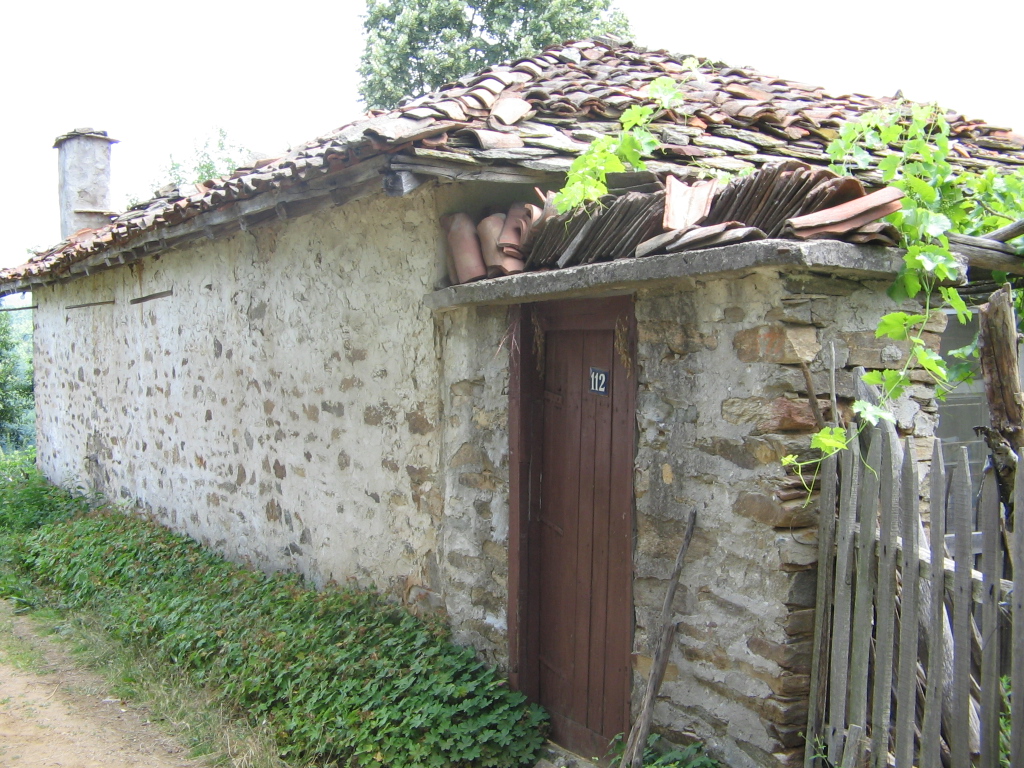
In two years many people wrote to me and I had established contacts with scholars from the Bulgarian Academy of Science, students, and many people from the diaspora. For many visitors this blog became a link to their past, ancestors, and origin. The next logical step was to create a Facebook group, which united all these people and gave them opportunities to share and communicate. So I did it in May 2009.

Gradually the online community started work offline. 

The local people from Chernichevo and those from the diaspora, living in the near municipality center Krumovgrad, decided to restore the  village Community center! And they managed to do this on the 20th of March 2010. I know it is a small step, but I am so proud of them! This is the grassroots democracy, this is the community building I wish to see everywhere! 

I am very pleased that the people from Chernichevo and its diaspora feel the blog and the FB group as their own. I remember one of them shared a link to a blog post and noted "Welcome to our blog!" This expression of "our" makes me believe we found the way! We are hundreds of dispersed people who share a sense of common identity.  

In fact, I do not have a strategy how to develop the community further. I am learning - a community builder in the making. I have some ideas, so... to be continued! 


The revival of the Community center in Chernichevo:


Note: The burning of juniper's fire in March is an ancient local tradition which aims to exorcise the winter and the evil forces.

* * *
Bonus:
Performance of women's amateur group from Chernichevo, recorded during the traditional village fair in 2011:

Saturday, 21 July 2012

From the archives: anti-traffic campaign from 2004

by: Georgi Stankov

It was the spring of 2004, and I was the campaign organizer of the project "Regional campaign for human traffic prevention, towns of Haskovo and Dimitrovgrad" of Maxima Foundation - Haskovo.

Introducing cyclists to the route
This project was part from Care International Bulgaria's project "Traffic prevention from, to and through Bulgaria", financed by Vienna municipality. 

Project's aim was to make the local youths aware about the human traffic. I had planned and organized an informational and preventive campaign. One of the hits in the project activities was a bicycle race in Haskovo.

The winners

The competitors had to travel several kilometers in the rough terrain of the hill Yamacha.

The boy with the black sweatshirt finished at 1st place. His name is Lyubomir. 

Behind him is the participant with second best result - Veselin. 

I do not remember the name of the third guy. 


A special prize for the youngest participants
On the photo in left are the wonderful twins Ralitza and Pavel Ilievi from Haskovo. At the time of the race they were 12-years old.

Young, but experienced and well equipped, they won everyone's respect. 
- - -
A friend of mine scanned these photos from my archive. Thank you, Tamara!


* * * * * 
Impressive Dutch video clip about human trafficis!

Interview with Conor


Last month we were lucky to have Conor Holton-Burke teach SAT math to students applying to US colleges soon. Most of my friends and relatives were really surprised and wondered why he would do that while on vacation, so I decided to interview Conor. Enjoy:

Lydia: How did you come up with the idea to do volunteer work while in Bulgaria?

Conor: When I initially decided to visit Bulgaria, I hadn't fully considered what I was going to do with my time. I knew I wanted to play a lot of tennis, but one cannot play tennis all day long. When I eventually thought about making my time in Bulgaria worthwhile, volunteering was honestly the first thing that came to mind, but I needed to find something that suited my skill set. My good friend Nasko (Atanas Atanasov) recommended that I could help Bulgarian students prepare for the SAT given my extensive standardized testing experience, so he put me in contact with you!

Lydia: Volunteering seems to be a hallmark of US culture. Why do people in USA volunteer? What do they do?

Conor: It is absolutely true that most students in the US spend a fair portion of their week volunteering. Though some volunteer purely out of the goodness of their hearts, most American students volunteer primarily because it serves their best interest. Students use their volunteer work to bolster their college, internship, grand, fellowship, and job applications; it has gotten to the point that any application would appear barren without at least some mention of volunteer work. Additionally, students are often taught from a young age that it is our duty to give back by volunteering as a way of giving thanks to the lives of privelege we were lucky enough to be born into. In my expereince as the philanthropy chair of my fraternity, I witnessed students volunteering in all kinds of ways: we organized a food drive, cleaned up a highway, restored a stream on several occasions, helped build a house in conjunction with habitat for humanity, helped pick up trash in our town center, etc. One of the most common ways for US students to volunteer, however, is by teaching. Many of my friends are just now entering yearlong English Teaching Assistantships in various countries or returning from summerlong Teach For America programs.

Lydia: Do you plan to do more volunteer work back in the US or in some other country?

Conor: I absolutely plan to volunteer back here in the US. This next year, I will be working at my former school (Whitman College), as I apply for medical schools. I'm hoping to work with the same organizations I worked with while I was philanthropy chair of my fraternity (doing the same sorts of activities I mentioned in my previous answer). If I'm lucky enough to become a doctor, I hope to spend a majority of my working life volunteering in places where doctors are most sorely needed, but that's a long ways off.


Monday, 27 February 2012

Intercultural skills: how to discover what is hidden behind the briar bush?

by: Georgi Stankov

Under this title today I led a workshop on intercultural skills (for those of you, who are interested in this topic, I have a blog in Bulgarian).
The trainer

The trainees
The topics included both theoretical and practical parts. The theory introduced the trainees to the concept of "culture", the specifics of the cultures, the intercultural differences, and the cultural shock. The practice stressed on development of skills for effective communication in intercultural environment and for adaptation to a foreign culture. 

This event was part of the project "Cover History without borders", realized by our partners EIA - Haskovo.


Ha-ha-ha, one of the obvious differences: as a Southern European, I wave my hands while talking, more than the Northerners. 

Tuesday, 30 August 2011

Relocation seminar 2011

by: Georgi Stankov

What: A seminar for relocation of eight Bulgarian students to Great Britain. This was the first ever intercultural seminar in Haskovo area.

Where: Youth center - Haskovo.

When: 28th August, 2011, Sunday. 

Who: Georgi Stankov, voluntary trainer at The Garden Association.

How: The methodology was based on the interactive teaching. It included theory, practice, multimedia presentation, energizer games, and discussion. 

Goals: 
1. To introduce the participants to theoretical knowledge about the concept "culture", the specifics of the cultures, the intercultural differences, and the cultural shock. 
2. To develop practical skills for effective communication in intercultural environment and for adaptation to a foreign culture. 
3. To combine theory and practice, in which every participant prepare their own Individual plan for the first three months abroad.

Results
Positive results on every goal. Indicators:
1. The enthusiastic feedback of the participants.
2. The desire of the participants during the preparation of Individual plans.

Future directions: 
1. Online monitoring on the implementation of the Individual plan for the first three months after the relocation to GB. 
2. Second group session in three months (all participants will come back for Christmas holidays) for further development of the intercultural skills and knowledge. 

----------------------------------------- 
The seminar was completely designed by me, which is a reason for pride :)

If you got bored of too much reading, this intercultural sketch will make you laugh:

Catherine Tate - The Interpreter 

Saturday, 16 July 2011

IPC - a temple of the Life-long learning values

by: Georgi Stankov

This is my tribute to the International People's College.
International People's College is a worldwide respected institution for non-formal education for adults. IPC is based in the lovely Danish city of Helsingor, known as Elsinore from Shakespeare's "Hamlet".

IPC was founded in 1921, after the World War I, when many progressive people advocated for peace and international collaboration. IPC promotes intercultural understanding and cooperation between the peoples from around the world. At IPC you can meet Africans, Europeans, Asians, Americans, and even Australians. The overall idea of IPC is that this unique meeting of people with different cultural and social backgrounds will create peace, tolerance, and friendship. 

"Global week 2011"
"At a Crossroads"
About 200 students study at IPC every year. There are two terms: Spring term and Autumn term. During the summer the teachers are free to travel, to rest or to make research. IPC management uses the campus and the teaching rooms to organize short summer courses. This summer I attended two workshops: "At a crossroads" and "Art and Science Have Date in Nature". Each workshop took a week. The trainers, the atmosphere, the participants, and the food were  fantastic!

"At a crossroads" was held from the 26th of June until the  2nd of July. Topics included: past and values study, decision-making, teamwork, conflict resolution. From my prefessional perspective, it was a very useful course.

"Art and Science Have Date in Nature" was held between the 3rd of July and the 7th of July. This workshop was part of a bigger event called "Global week 2011", which included several parallel workshops in the same time. In difference with "At a Crossroads", this wasn't a psychological workshop. I took it for my pleasure because I wanted to learn more about the connection between art and science (especially math).

Also I had the chance to establish relations with Lucie Cizkova, who is in charge with PR and Networking at IPC, as well with the IPC's principal Søren Launbjerg. I could see how highly functional as institution is IPC and how the personal growth of the students is set in the heart of the college's study program and teaching methods. See what subjects the students have right to choose: Global challenges line, US studies, African studies, European culture, Development management line, Journalism, Photography, Drama, Art & Video, Body, Mind and Spirit, Self-Expression through Arts, and many other... It is true that I am a longtime supporter of the LLL and everything related to non-formal education, also it is true that my own courses are totally under the philosophy of LLL, but in a matter of fact I didn't know how exactly it works on an organizational level. Now I know more.

The group from the workshop "Art and Science Have date in Nature"
And now... Now I have a dream - to apply the Life-long Learning concept in Bulgaria. To go beyond what the formal educational institutions give. To support the growth of more creative, spontaneous, open-minded, free, and tolerant persons in our own society. I wish to see Bulgarians more happy, more optimistic, more curious, and able to think big. Here I see the role of The Garden Association as institution, dedicated to the non-formal education. In my bravest dreams I see The Garden as the Bulgarian equivalent of IPC. Well, you may say I'm a dreamer, but I'm not the only one...

Sunday, 20 March 2011

Georgi Stankov had been in course for intercultural trainers

by: Georgi Stankov

I have just came back from the training "Developing Intercultural Training Skills", organized by LTS Training and Consulting. The course took place at Bath Spa, UK, between 14th and 18th of March 2011.

From left to right: Justin Bangowa, Kate Byron, Paramsothy Thamotharampillai, Karin Navermyr, Georgi Stankov,
Anna Tarnowska - Waszak, and Adrian Pilbeam
Who's who in this international group? Here they are:

Justin Bangowa (The Netherlands) is аn Intercultural communication student. Also he is intern at LTS. His parents have different origins (Indonesian father and Dutch mother), but Justin is 100% product of the Dutch culture. 

Kate Byron (United Kingdom/Eire) had studied International development at Bristol. Now she works for a large Irish NGO - Comhlamh, - who sends volunteers for humanitarian missions in Africa.

Paramsothy Thamotharampillai (Malaysia/Germany) is also know as Param. He works for Mercedes Benz and trains the sellers from Eastern Europe how to sell the company's products. 

Karin Navermyr (Sweden) teaches Swedish for foreigners, who relocate in Sweden. She also knows Old-Icelandic and Russian.

Anna Tarnowska - Waszak (Poland) is a teacher of English in John Paul II Catholic University of Lublin.

Adrian Pilbeam (United Kingdom) is owner and head trainer of LTS Training and Consulting. It was the 34th course edition! He is an intercultural erudite and a nice person. I liked both his professional and personal approach.

"Developing Intercultural Training Skills" is a sort of trainer training course. It was very useful for me as a way to upgrade what I have learned at the university and then through consequent self-education. I was familiar with Hofstede's theory about intercultural differences, but I needed to integrate this knowledge into practical work on terrain.

Now I feel much more confident in the design and implementation of a training of a group whose members have various cultural background and identity. The training included many useful exercises, games, and case studies. Since I am developing as intercultural consultant, I find it was valuable to refresh my skills and approach. As a voluntary trainer of The Garden Association I plan to work intensively in the field of the skills for intercultural communication .