Showing posts with label events. Show all posts

Thursday, 10 August 2017

Jane's Walk 2017 in Haskovo: "The two towers"

"Cities have the capability of providing something for everybody, just because and only when, they are created by everybody" - Jane Jacobs

In our town there are two water towns - one at the most northern place of the Haskovo, and one at its most southern place. Last year we walked the town from west to east, bu this year our walk crossed it from north to south. So "The Two Towers" tour was created.

The walk took a little more than two hours. The Google map calculation is incorrect,
because can't reflect the car traffic and the hilly terrain.
The hills of Haskovo are picturesque, and we were enjoyed our walk. Also we found things that must be improved in terms of walkability and accessibility of urban space in our town. My photo report will be divided in three parts: The North, The Center, and The South of Haskovo.

1. The North.


  The group of walkers gather together. From left to right: Eli (architect), Georgi (Eli's husband, a geodesy cartographer), Todor (retired vocational higher school teacher, and coach of the local orienteering team), Simon (mechanical engineer and small business owner), Hristo (artist, trying to hide himself from the camera), Zlatina (history student in Plovdiv), Lydia (Englich language teacher and my girlfriend), and Petar (our son). 
Later one more guy joined the group - Sevo (an amateur photographer).

The tower is close to the town, in an industrial area. 
There are no people living around. 
There are only small factories and stores. 
Also the repair base for the city's fire trucks is this area. 


A factory. 
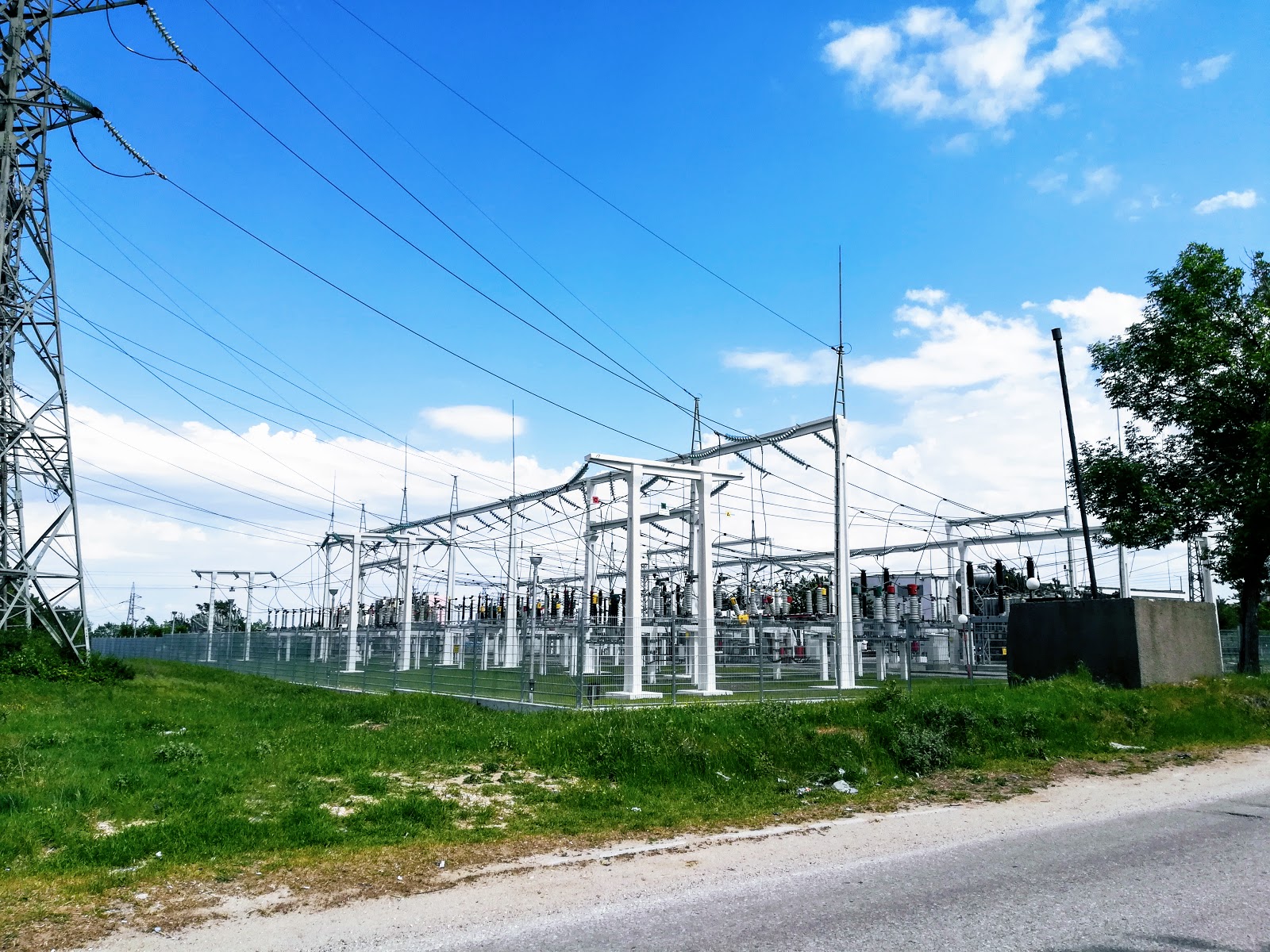
 One of the electricity stations in the town. 

This was the first water tower in the northern part of the town. Now it is not used.  

 In the communist period, this building was a factory, where the deaf people worked. 
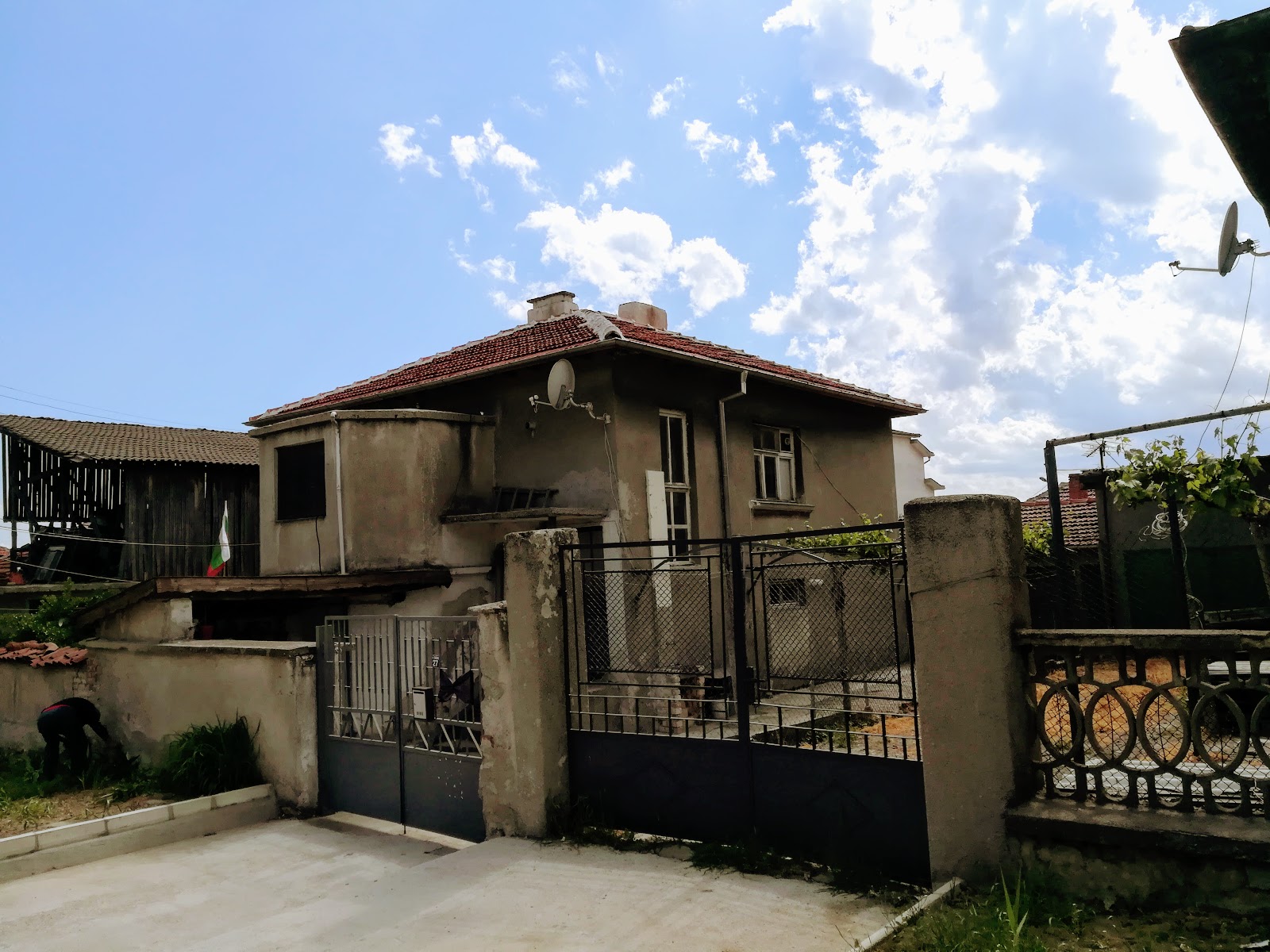
Finally we entered the inhabited areas of the northern part. It is interesting - on the right side of the main road there are only houses. On the left side of the main road there are large apartment blocks. 


 And this is a trade center. Can you imagine: it is owned by Chinese people. Even in Haskovo now there are Chinese. The migration nowadays in not only on the borders of the state (as it was during the communism), or from Bulgaria to the west (as it was in the last 25+ years after the communism). Now there is one more route - from Asia to Bulgaria, and what is impressing, is that few Chinese families came to live here, not in the bigger cities of the country.

 Some of the big apartment block on the other side of the main road. 

 Nice small public space at front of a small residential building. 

2. The Center. 

Slowly we reached the center. Some of us did not know that at this place there is a monument if the Bulgarian revolutionary Petar Berkovski.
The architect among us - Eli, said that each monument needs some open space around, 
otherwise it will remain invisible, and will be lost in the urban body. 

An administrative building from the 1970s. 

  I shared with the others the story of this clock tower. Long story short - on the same place in the early 19th century was built a stone tower. For unknown reason it was destroyed in the beginning of the 20th century. In the 1980s, when the local historians ecided that our town is 1000-year old, the local authororities decided to build a new clock tower at the place of the old one. I love this tower very much for its interesting design. It is high, but because it is not monolithic and it's made from columns, there is some etherealness and lightness in it. The construction does not "weigh" in space.


The concept of continuity is presented by the fact, that the architects choose to build the tower at the same place, where the old stone tower was built. The stone scripture says that it is dedicated to the millennium anniversary of Haskovo. 

This is the Monument of Envy. 
It is the only monument, presenting this bad human characteristic. 

 One of the many nice buildings in the city center. There buil in the first half of the 20th century.

 3. The south. 
 
We walk one of the most important arterial roads in the town - it's called blvd."Osvobozhdenie" (in Bulgarian this means "Liberation"), but the locals call it simple "Kardzhaliyska" street, because it goes to the next big town in the south - Karzdali.

We are in "Hisarya" neighborhood. In Turkish "hisar" means a fortress (compare with Hisarlik of  Trow). This place is called so fr reason - in this area was the medieval fortress of Haskovo. 

 View to the center and the north of the town. 
Finally we reached the southern Water tower of Haskovo. 
Local residents have built (probably illegal) farm buildings in which they are raising animals.


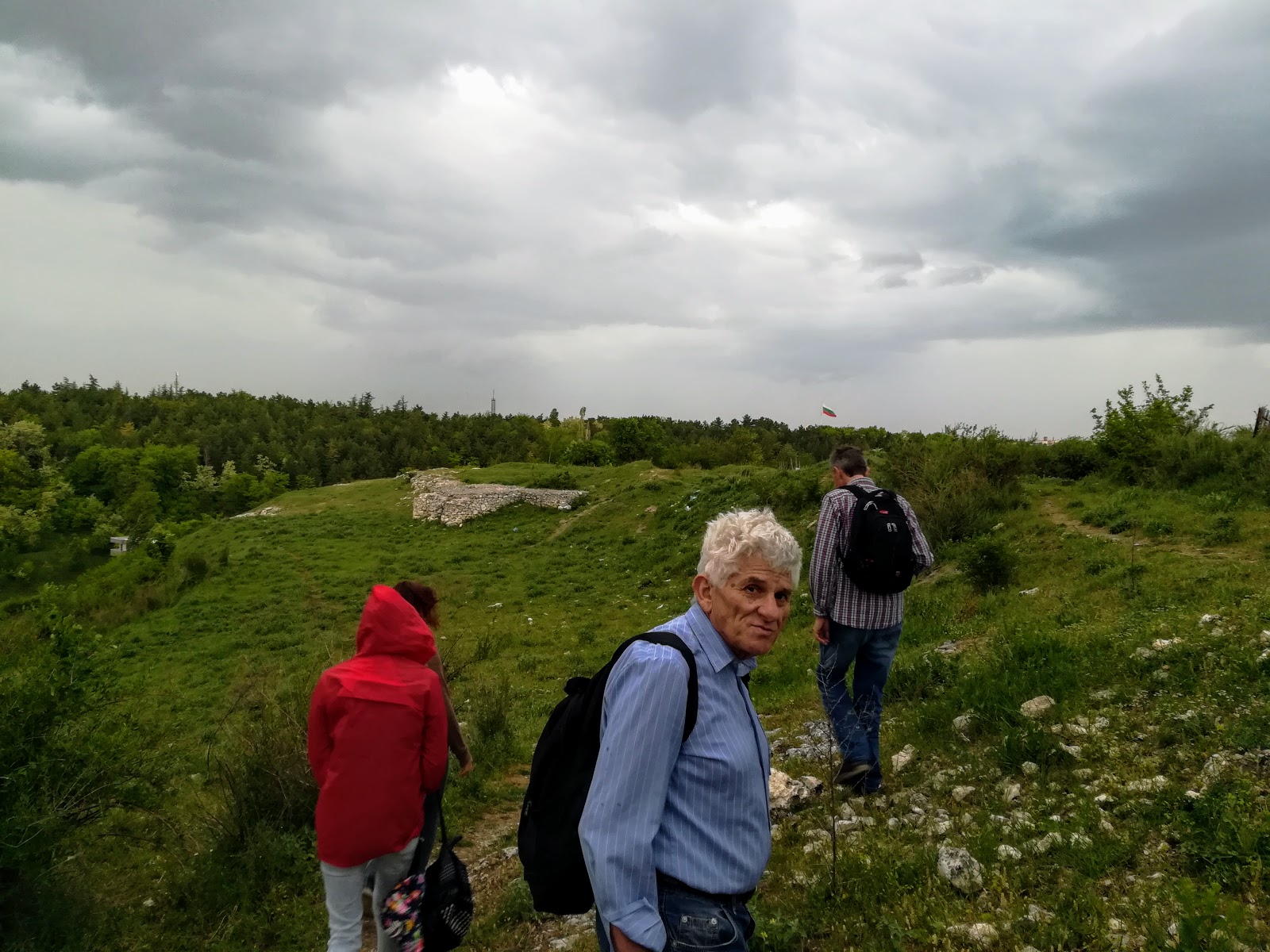
The photographer Sevo took this photo of our group. On my tight shoulder you might notice the northern tower. We were there just two hours ago, we crossed the town, and finally we completed the walk on the towns southern side. Then we visited the ruins of the medieval fortress of Haskovo. Meanwhile, heavy rain fell upon us.

 But the rain did not stop us. Happily, it was a spring rain, which continues for about a twenty minutes, and soon stopped. 


 We went back to the town's center. It was a pleasant time. 

 And then a rainbow appeared in the sky.


Tuesday, 25 June 2013

The Garden took part in a public discussion in Haskovo City Hall

Yesterday representatives of The Garden Association took part in a very important public discussion in Haskovo's City Hall.

There was a presentation of the project for Integrated Plan for Urban Reconstruction and Development in Haskovo, term 2014 - 2020. It is a subject with a crucial importance for the urban environment and we wanted to share our ideas with the team which worked on the plan. It was my honor to present our interdisciplinary team's views.


I shared our vision of Haskovo as a Smart city, which development unites administrative (aka soft) measures with infrastructure measures, dealing with economic development, green policy and environment, mobility and walkability, formal and non-formal education, arts, mass sports and physical activity, and so on.

Among our ideas are:

  • bike lanes from the most Eastern to the most Western point of the city; 
  • green roofs on the big public buildings; 
  • creation of small forests in each school yard, instead of the concrete and the asphalt, which dominate now; 
  • artificial climbing wall; 
  • more nature-oriented playgrounds and more thematic playgrounds; 
  • more public fountains with water for drinking in the city center; 
  • free public toilets in the city center; 
  • small public monuments, reminding of significant places, events, or persons from the city; 
  • art-incubator: an institution encouraging the local artists and craftsmen; simultaneously creation of an annual art-festival; 
  • creation of center for social entrepreneurship and social innovation; 
  • creation of Museum of childhood - a place, collecting artifacts from different epochs and providing option for children games, shows, and thematic workshops for children; 
  • establishment of an international university in Haskovo; 
  • e-municipality; 
  • free wireless internet access in the city center. 
We are glad that our suggestions met a positive feedback from Haskovo's vice-mayor Mrs Staneva and from the company which developed the project. They promised to add most of our ideas in the final version of the Plan. On our side, we proposed our expertise and consultation for free. 

The interdisciplinary team who created the above-cited ideas: 

Vladislav Dobrev, computer engineer, 
Deyan Yanev, philologist, education management expert,
+Georgi Stankov, psychologist, 
+Tanya Stoynova, lawyer, 
+Lydia Staikova, career & educational counselor, 
+Vladimir Grachki, linguist,
+Simon Zenopian, engineer,    
Veselin Harmandzhiev, engineer. 

Sunday, 23 June 2013

The book of Brailsford on Macedonia has just been published

The seminal work of Henry Brailsford "Macedonia - Its Races and Their Future" has just been published. Besides the print edition, there is an e-book version, which is available here for free. The publishing of this book in Bulgarian was an old idea, but its realization went slowly because of the lack of money. Finally through the generous financial grant by Mr George Lebamoff (USA) the dream came true. 

Book's official presentation will be held on June 24th 2013, Monday, in the Museum of Sofia university.


The author: Henry Brailsford was a talented journalist, who spend several months in Macedonia. He was famous for the objectiveness and neutrality of his writings about one of the world's hottest spots in the dawn of the 20th century. 

The book:  "Macedonia - Its Races and Their Future" is a very respected independent source about the history, the population, and the political conflicts in the geographic region Macedonia in the dawn of the 20th century. Brailsford presented the Slavic-speaking population of Macedonia as Bulgarian.

The publisher: "Bulgaria - Macedonia" Institute is our partner organization. It is a Bulgaria-based think tank, engaged in research of Balkan political and social issues and the interrelation between Macedonia and Bulgaria in the 21st century.  

The full list of the people who donated for the book is on page 5. As organization, we are proud to be among the people who paid their tribute for this righteous cause. 

Wednesday, 8 May 2013

Jane's Walk in Haskovo: "Ovcharcki - The Neighborhood of the Shepherds"

On the 4th of May, Saturday, we organized "Jane's Walk" for a first time in Bulgaria and on the Balkan peninsula, and in Eastern Europe. After we made the first Google hangout on social and political issues in Bulgaria, the team of The Garden Association became a pioneer in another important subject. 

Jane's Walk is an international initiative, run by a group of friends, supporters and followers of Jane Jacobs - the prominent urban development thinker, social activist and community organizer. It is a very simple idea - each year people from the city get together and walk across a certain neighborhood, led by a local volunteer, called walk leader. They discuss the story of the neighborhood, its identity, its open spaces' specifics and walkability, and eventually whether it is friendly for living and what could be done for the life of the local community to be improved.

Jane's Walk is very famous in Canada and the US and gradually becomes popular in Western Europe too. But in Eastern Europe, and in particular the Balkans, it is still an unknown event. There are initiatives like Free Sofia Tour, led by volunteers, but they provide mainly free guide services for the foreign tourists and their goal is the make foreigners more familiar with the landmarks of the Bulgarian capital's center.

How we went into this? 

I discovered Jane's Walk last year, while searching for more information about Jane Jacobs' activism. I thought that it is a great initiative and that The Garden Association should take part in this. We are admirers of Jane Jacobs. Our chairman +Lydia Staikova has read many Jacobs' works. Also, I have a professional interest in the fields of Environmental psychology and community development, which are related to some of the issues that concerned Jane Jacobs.

The Walk itself

I must say that the Walk is always held in the first weekend of May in honor of Jane's birthday. So we chose 4th of may, Saturday. But first of all, I registered myself as City organizer in the Jane's Walk website and then I registered my walk "Ovcharcki - The Neighborhood of the Shepherds" and made this Google map:

Then I made a Facebook event and I invited my fellow-citizens who would be interested in this walk.

The Green Corner - I took photo for the
FB event from Google Street View.
And The Day came. At the appointed time and at the appointed place the people started to gather, one by one. The Meeting Point is a significant place: in the past, about 70 years ago, it was the School of Nursing in Haskovo. It is at the crossroads of "Makedoniya" Str. and "Osvobozhdenie" Blvd. and here is the western border of my neighborhood "Ovcharski."

The first walkers come. 
At the background - the 
former School of Nursing.
For many years this building has not been a School of Nursing. It is the headquarter of municipal company for funerals. But I gave a better name for this location: The Green Corner. First, because the building is painted in green, and second, because at the street there is a the small garden with green bushes.

Our walk started on "Makedoniya" Str. - one of the two streets, alongside with "Dragoman" Str., which cross the entire neighborhood from West to East (or the opposite). Stop One was the Fire Station. Since the day when it was founded, the Fire station of Haskovo has been located at this place. Many years ago, the first firemen used wagons with horses and barrels of water to extinguish the fires. See the Fire station via Google Street View:


We discussed the fate of the horses in the time of the first firemen and then we continued the walk.
Walking and talking, after stopping - more talking :)
Stop Two. I call it The First Settlers, because here is the historical heart of the neighborhood. Here lived the founders of this neighborhood, and what gives me a special feeling is that many of their descendants still live here. The neighborhood was called "Ovcharski", because the first settlers were farmers and breeders, and especially because they had a lot of sheep (Bulgarian: "Овчарски"; English: "Shepherd's neighborhood"; Turkish: "Çoban mahalle").
Now we are at the historical heart of the neighborhood! I am very passionate while talking about The First Settlers, some of whom were my ancestors. They come here more than 160 years ago. By the way, do you see the lime tree - near this place there was a water fountain for the local people.
The church "Sv.Georgi"
Stop Three - the local Orthodox church "Sveti Georgi" (aka "St.George"). It was built by The First Settlers about 160 years ago, when the Bulgarian people was under the yoke of the Ottoman empire. The church was named after Saint George - the protector of the shepherds (and you remember that "Shepherd's" is the neighborhood's name). Through the years three men from my family were members of the church board.


Stop Four - the park. Now this place is a park, but it was intended to be something different. In the late 1940s the local people planned to build a new and more beautiful church for their neighborhood. But the communist regime, which came to power in this time, was atheistic and anti-Christian in its nature, so the plan failed... Well, at least now we have a park with playground for the kids. See the park via Google Street View:

Stop Five - the small (and nameless) square with the building of the local Community center. In the past the building did not exist and the small square was a bigger place where the local people celebrated their feasts and made their gatherings with traditional songs and folk dances. Around 1950-1955 this wonderful tradition disappeared. I would not venture to say whether this was because of communism, or because of modernity, or both. As a location, in this period this square was at the end of the neighborhood, but actually this was its center, its main social space. Actually today it still has this function, because here is situated the local community center, and there are two grocery stores and a small open market for fruits and vegetables. As for the Community center, today its social function is limited to give shelter of the local pensioners to play cards and board games. See it via Google Street View:
The local people call the school "Otec Paisiy"
(in English "Father Paisiy").

Stop Six - the school "Sv. Paisiy Hilendarski" (St. Paisiy of Hilendar) which was initially created as a church school at the church "Sv. Georgi" (see Stop Three). Later a separate building was built, more relevant to the educational needs of the local community. But even in a separate building, we must remember that the school (as an institution) is a direct continuer of the church school. Four generations from our family had studied in this school.


Here the walk finished. Saying Thank you! to the walkers.

After Jane's Walk we decided to have a Jane's Beer at the local pub.

NOTE: Totally 12 people and one dog joined my first Jane's Walk. They are: +Hristo Dimchev, Veselin Harmandzhiev, Plamen Moskov, Petronka Stankova, Petar Stankov, +Lydia Staikova, Mariyana Valcheva, +Simon Zenopian, Petya Skerleva, +Vladimir Grachki, +Yanko Zaprianov and +Kiril Hristov. 
The dog's name is Casper.


Saturday, 27 April 2013

Today we launched our first Google Hangout: "Bulgaria in 2013 and beyond"

Today is a historical day! The Garden Association launched its first Google Hangout: Bulgaria in 2013 and beyond. 

We are pleased to inform you that this is the first hangout on social and political topics in Bulgaria, so our event had a really historical meaning. We want to use the new information technologies and social media for the benefits of the civil society, and Google Hangout is an excellent tool to achieve this purpose. 


We see Google Hangouts as a tool for the development of direct democracy by small communities and civic groups, which can share and discuss ideas with the rest of society. In times of a severe political, social and economic crisis in Bulgaria, we invited several prominent social activists and thinkers to share their opinions and ideas on the overarching theme "Bulgaria in 2013th and Beyond".

Our guests were:
+Denitsa Sacheva - PR expert, professor of Political communication at New Bulgarian University, nominated for the award "Human of the year 2012" in Bulgaria, known for hew humanitarian work with immigrants and refugees, who suddenly switched her social role and decided to go into political life.
+Bogomil Shopov - a prominent blogger and activists for internet rights and access to information, co-founder of the NGO "Electronic border", ex-candidate member of the European parliament, co-founder of the Bulgarian Pirate party.
+Polina Paunova - journalist from the highly respected website Mediapool.bg and co-founder of the non-formal alternative media group "Angry Young Men" who broadcast various social actions, which are usually not covered by the "traditional" mainstream media.
+Todor Tanev, PhD - professor of Political Science and Head of Public Administration department at Sofia University "Sv. Kliment Ohridski", expert of strategic planning, who took part in the creation of the National strategy of Armenia.

Our additional guest was Mr +Ivan Delchev, entrepreneur and internet marketing expert, co-founder and co-owner of a small company, where he is heading the Quality Assurance department.

The hangout's topics were: how did we get here, what happens with the civil society in Bulgaria, what are the similarities and differences in the protests of 2012 and early 2013, how citizens can influence the politicians, what needs to be changed in this country and how, what must be the very first priority for the new state's government, and so etc.

Because of our lack of experience, we made one weakness in the hangout: the side noise. I was in a hurry and I choose a place nearby the street. Also one participant's washing machine was working :) But still it was an experiment, there was a meaningful conversation with great participants, and, Gosh, we did it!


Saturday, 9 March 2013

The Men's mythopoetic society of Haskovo

Robert Bly at his reading. Photo from Wikipedia.
Today I started an initiative, which I was dreaming about for a long time. 

I wanted to create a men's group. A group for young men.

The idea of the mythopoetic men's movement was created by the American poet Robert Bly. He insisted that the current society hurts the men's souls and changes the millenniums old tradition of men's growth. 

The concept

Bly's book "Iron John: A Book About Man" is a seminal work, which inspired thousands of men to seek for their personal, spiritual and social development. The name of the book was taken from the fairy tale "Iron John (or ""Iron Hans") from Brothers Grimm's collection. This is a story about the maturing and growing of a young man. The mentor's role is an important element of this fairy tale, because John grows with the help of a wild man.

Bly is not anti-women. He is pro-men. Bly respects the women's need for development and independence, but underlines that men have the same need. Especially today, when men grow surrounded by women, without the presence of a significant male role models in the most of the day. Since the early 1980s Bly apply his deep visions of the new reintegrated and strengthened men through series of workshops for men. This initiative eventually gave birth to the Mythopoetic Men's Movement.

The methodology 

The movement led by Bly is very influenced by C.G.Jung's ideas about archetypes. The men's gatherings are focused on issues like gender role, gender identity, and emotional and psychological well-being of the modern man. Men just think and talk, and then listen to others, and then rethink and talk again. The workshops often use storytelling with musical accompaniment. The purpose of the workshops is to empower men by giving them archetypal characters which could explain their own emotions and abilities.

So after several weeks of preparation, today was the first meeting of (what I call) the Men's Mythopoetic Society of Haskovo. I salute these brave and open young men - all in their mid-twenties - for their will and for their courage to explore, share, discuss and grow their male souls.

Dear Veselin, Hristo, Simon, Plamen, Vladimir and Evgeni, - you are all great!

* * *
Parts of "Iron John" (thanks to Google Books):

Sunday, 2 September 2012

Team building for the Probation service in Haskovo

by: Georgi Stankov

On 31th August and 1st September 2012 we conducted a team building for the officers from the Probation service in Haskovo district. Totally 14 officers took part in this event near Ivaylovgrad in the beautiful Eastern Rhodopes. 

In the wild nature we created a soul-nurturing atmosphere, in which the probation officers worked with a great enthusiasm to improve the quality of their professional performance. 

Here are some photos from the outdoor exercises. 

One of the teams is building his strategy...

The game begins.
Yes, we can! 
Be quick or be dead...
Overcoming obstacles...
...is not an easy thing!

On the other front the battle continues with lacrosse-like game.
Fast and furious!


It is time for the next test!
I tie the wrists and ankles of the participants.
Before the wild run...

In a moment of a strong pressure, the guys held their hands...
...and then they went through the challenge together.

The gentle presence of the ladies.
Natural born winner.
Part of the team.
Time to think...
Thinking deeper...
We think too!
The winners? They all were winners!

And this is me, relaxing after the team building and waiting for my deserved dinner!